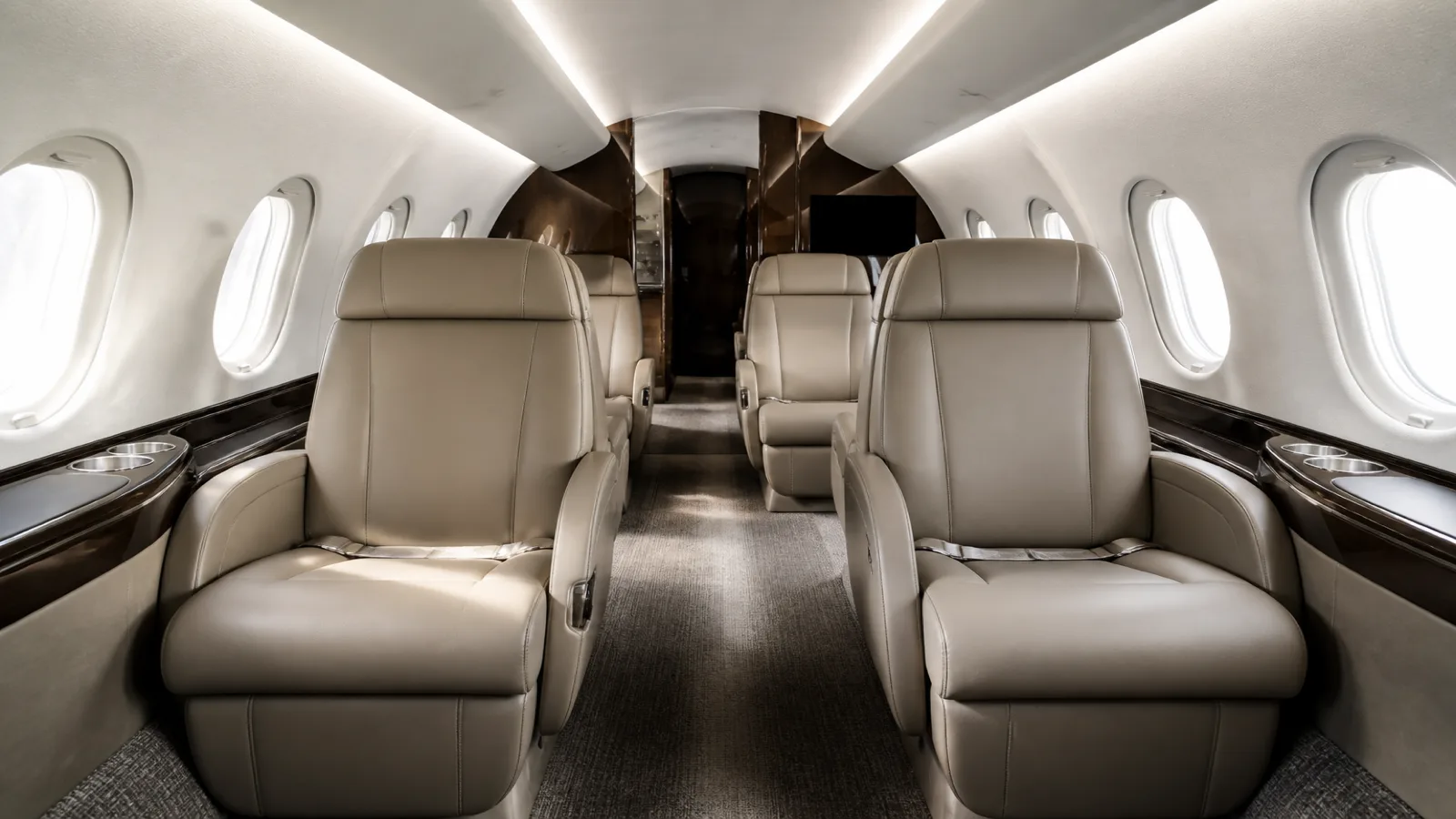
How to choose a private jet by mission (not by brochure envy)
People searching how to choose a private jet often start with a famous type name. Better missions start with the job: passengers, bags, distance, airports, privacy, and hard clocks. Category labels—VLJ, light, midsize, super-midsize, heavy, long-range, VIP airliner—are planning shorthand. They are not substitutes for confirming the specific serial against the manufacturer Airplane Flight Manual (AFM) and airport performance data.
This guide from LUKS Aviation is deliberately different from our Turkey-focused small vs large private jets article. Here we build a mission matrix, walk scenarios, and flag undersize/oversize mistakes. Browse examples on the fleet page, then request a matched quote via book a private jet.
Contents
- Mission-first questions
- Categories in plain language
- Decision table
- Scenario walkthroughs
- Undersize and oversize mistakes
- Confirm against AFM and airports
- Selection checklist
- Frequently asked questions
- Conclusion
- Sources and official references
Mission-first questions
- How many passengers today—and who might still join?
- What is the baggage volume reality (not the optimistic version)?
- What is the city pair and is there a second leg the same day?
- Which airports are preferred, and are any performance-limited?
- Do you need a working cabin, a rest cabin, or both?
- Is privacy compartmentalization required?
- What is the hard clock on arrival?
If you cannot answer these, you are not choosing an aircraft yet—you are still defining the mission. For Turkey charter process context, see private jet charter in Turkey and how to rent a private jet.
Categories in plain language
- VLJ (very light jet): Compact missions with light loads and suitable airports; limited when bags or passengers grow.
- Light jet: Common short-to-medium executive hops with modest passenger counts.
- Midsize: More cabin room for work and bags on medium sectors.
- Super-midsize: Often discussed when range, cabin volume, and productivity needs rise together.
- Heavy jet: Larger teams, longer sectors, or stronger privacy/comfort requirements.
- Long-range: When the mission’s distance and nonstop intent push beyond shorter-category comfort zones—still confirm serial performance.
- VIP airliner: Large-cabin, high-passenger or ultra-privacy missions; rare for routine two-person hops and often overkill when mis-specified.
Manufacturer homepages for educational browsing (not a substitute for AFM data): Gulfstream, Bombardier, Embraer, Textron Aviation, Dassault Aviation.
Decision table
| Mission signal | Category conversation often starts at… | Watch-outs |
|---|---|---|
| 2–4 pax, light bags, short/medium hop | VLJ / Light | Rigid oversized cases; performance-limited airports |
| 4–8 pax, cabin work, medium sector | Midsize / Super-midsize | Underestimating bags; Wi‑Fi assumptions |
| Larger team or long nonstop intent | Heavy / Long-range | Overbuying cabin for a short hop |
| Very large group or ultra-privacy layout | VIP airliner / large cabin | Cost and airport fit; empty seats are not a strategy |
| Multi-city same-day string | Depends on total duty + payload | Crew duty may outrank seat count |
Passenger bands above are conversational starting points only—not certified seating commitments for any type.
Scenario walkthroughs
Scenario A — Two executives, Istanbul morning meeting abroad
Mission: confidentiality and arrival buffer. A light or midsize cabin often enters the conversation if bags are light. If both need to work with binders and garment bags, midsize may be the calmer fit.
Scenario B — Family of six with villa luggage
Mission: volume. Undersizing creates apron chaos. Midsize or larger categories are often discussed before anyone falls in love with a sleek light-jet photo.
Scenario C — Project team with a second city the same evening
Mission: string planning. Category choice follows total flying, duty, and payload—not the first sector alone.
Scenario D — Discreet long sector with rest needs
Mission: cabin environment. Heavy or long-range conversations appear when rest and nonstop intent matter; still confirm the serial.
Undersize and oversize mistakes
Undersize: choosing by hourly habit while ignoring bags, then removing seats mentally that still exist as weight. Or picking a short-category aircraft into a performance-limited field without ops confirmation.
Oversize: booking a VIP airliner personality for three passengers on a short regional hop because the photo looked impressive—then discovering parking, handling, and positioning complexity you did not need.
Both mistakes are expensive. The cure is the mission checklist, not a louder sales deck. Pricing factor literacy helps—see private jet prices in Turkey.
Confirm against AFM and airports
Before you treat any seat count or range claim as operational truth, confirm against the manufacturer AFM/airport performance for the specific serial you will fly. Brochures average; dispatch does not. Runway length, temperature, payload, and obstacles change outcomes. Your operator’s performance calculation is the authority for the trip.
Selection checklist
- Write the mission in one sentence
- List pax + bags honestly
- List airports and any known constraints
- State nonstop intent vs acceptable tech stop
- State cabin work vs rest priority
- Ask for two category options with trade-offs
- Confirm serial performance before emotional lock-in
- Compare quote inclusions—not only category labels
For ownership-side decisions later, aviation consulting and aircraft management are different products from on-demand charter selection.
Availability is part of the choice
Learning how to choose a private jet also means accepting that the theoretically perfect category may be unavailable on your date. A strong brief lets ops propose the next-best serial that still meets airports, payload, and clocks. Principals who insist on one marketing type name often wait longer and pay for scarcity. Principals who state mission constraints receive options faster. When two categories both work, compare cabin work quality, baggage volume, and positioning logic—not only prestige. If your annual flying is irregular, on-demand charter across categories may beat forcing every trip into one owned type.
Airport performance literacy without fake numbers
Short runways, hot temperatures, and high elevations reduce payload capability on many aircraft. You do not need to memorize performance charts; you need to tell ops which airports you insist on and accept their confirmation for the specific serial. If a mountain or coastal field is important to the mission, say so before you emotionally lock a long-body cabin that may not fit the day’s conditions. Manufacturer homepages help you learn product families; the AFM and ops calculation decide the trip.
Payload, fuel, and the invisible trade-off
When you choose among categories, remember that fuel and payload trade. A long nonstop intent with a full cabin and heavy bags may force a different aircraft than the same city pair with two passengers and soft luggage. This is why brochure range claims are not trip plans. Ask ops to confirm the mission as packed—not as wished. If a tech stop is acceptable, say so; acceptability expands options and can reduce category pressure. If a tech stop is unacceptable because of a hard clock, say that too. Hard nonstop requirements are mission constraints, not lifestyle branding. For multi-city days, evaluate the highest-demand leg and the cumulative duty, not only the first takeoff. A cabin that feels perfect on leg one can become wrong by leg three if bags accumulate or passengers join.
Human factors in aircraft choice
Some principals need a table for four to work; others need silence and a place to sleep. Some boards refuse mixed travel with outsiders; others welcome advisors in the same cabin. Encode those human factors in the brief. Category labels will not capture them. Also declare mobility needs: a passenger who struggles with steep stairs may influence aircraft door and ground-support choices. None of this requires inventing seat counts; it requires describing the people. When ownership is on the table later, the same mission diary that guided charter selection becomes the utilization model for acquisition diligence and management planning.
A calm selection process with two options
Ask your broker for two workable options with explicit trade-offs: cabin volume versus positioning, speed versus airport fit, or lower category versus tighter baggage rules. Decision quality rises when you see trade-offs rather than a single “recommended” label. Compare quote inclusions using a checklist mindset before you emotionally adopt a type name. Confirm the serial’s performance last. That order—mission, options, inclusions, serial—prevents most undersize and oversize mistakes.
Frequently asked questions
What is the best private jet overall?
There is no universal best. There is a best fit for a defined mission and a confirmed serial.
Should I choose by brand first?
Brand familiarity is fine for comfort, but mission payload, airports, and availability should lead.
Is a larger jet always safer?
Safety is an operator and regulatory system, not a cabin length contest. Do not use size as a proxy for safety marketing.
How is this different from “small vs large in Turkey”?
That article focuses on Turkey-oriented size trade-offs; this one is a mission-category framework with a decision table and AFM confirmation language.
Can I switch aircraft after quoting?
Yes if availability and performance still fit—but late switches can change price and timing. Lock requirements early.
Where do I compare models educationally?
Manufacturer homepages (Gulfstream, Bombardier, Embraer, Textron, Dassault) plus operator performance for the serial.
What if my passenger count keeps changing?
Give a range and a hard maximum. Unbounded churn makes honest aircraft selection impossible.
Conclusion
Choosing a private jet is a mission design exercise: passengers, bags, distance, airports, and clocks first—category labels second—serial performance last and decisive. Avoid undersize surprises and oversize theater.
When your mission sentence is clear, To request a route-specific quote, use book a private jet or reach the team via contact.