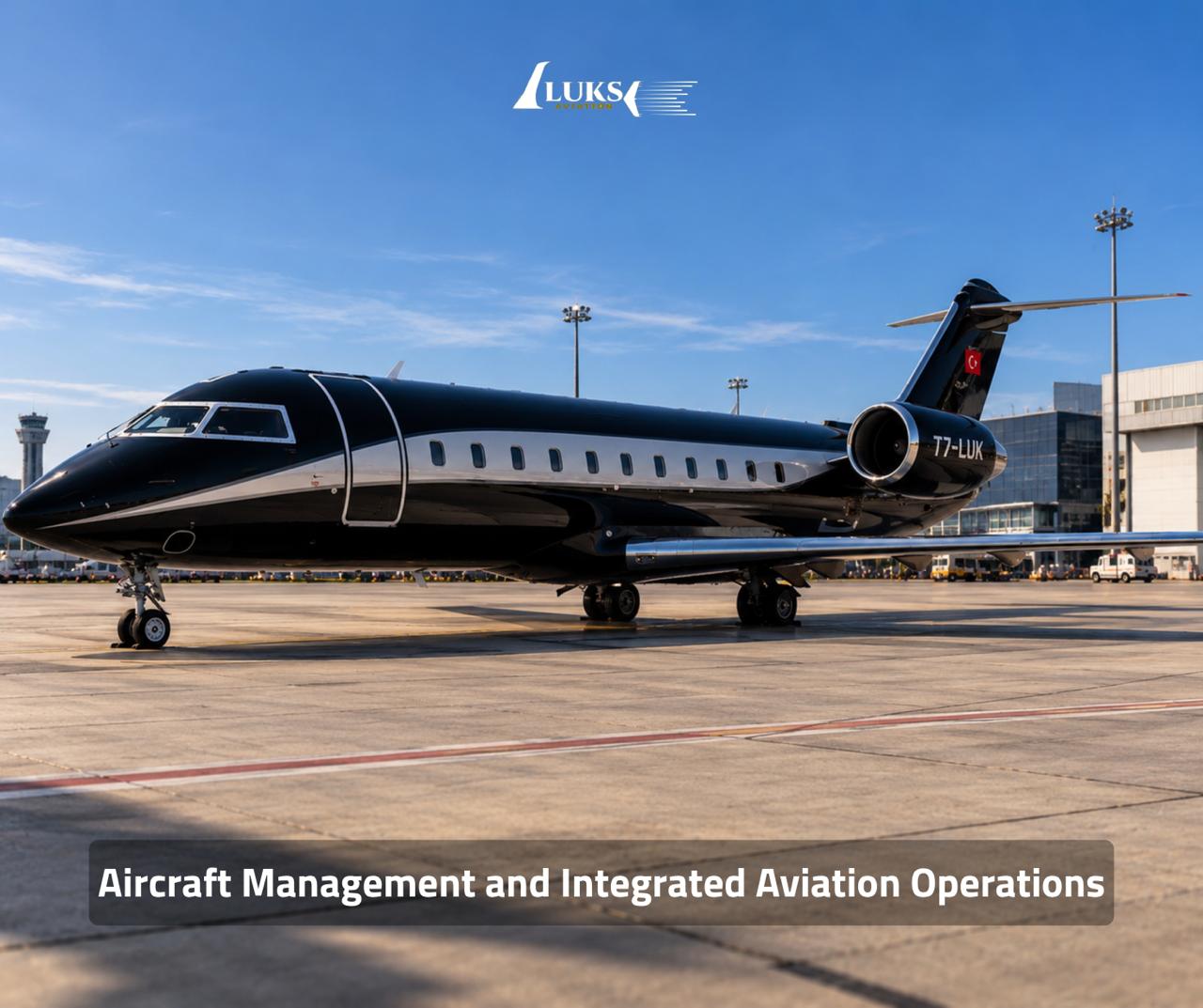
Aircraft Management and Operations :Owning a private or business aircraft is just the beginning. After it enters service, someone must keep maintenance on schedule, coordinate the crew, prepare each flight, manage records, meet regulatory requirements, and handle the practical work that has to be finished before takeoff. This is where professional aircraft management and aviation operations become important. Private owners and companies often find it difficult to handle every aviation responsibility themselves. Strict regulations govern even ordinary flights, which means several people and organizations must stay coordinated. Owners may be busy with business or personal travel; meanwhile, someone still has to keep the operation running behind the scenes. LUKS Aviation manages an aircraft as one connected operation. Maintenance, flight planning, crew support, and day-to-day coordination are handled together, based on what the aircraft and its owner actually require rather than as separate tasks.
What Does Aircraft Management Involve?
There is more to aircraft management than maintenance alone. The work varies according to the aircraft, its registration, operating model, and frequency of use. Depending on those factors, professional management may cover technical work, operational support, and administrative duties. These may include: Planning maintenance and keeping it coordinated with the aircraft’s records, crew needs, and flight schedule Supporting flight planning and arranging ground handling Working with maintenance providers, airports, and other service companies Tracking aircraft availability and helping manage domestic and international operations Maintaining the regulatory and operational paperwork The aim is broader than finishing isolated tasks. Each part of owning and operating an aircraft needs to stay connected. The distinction matters. An aircraft may be mechanically ready yet still need substantial operational preparation for a specific flight. The same applies to a carefully planned trip: poor coordination of maintenance, crew availability, or documentation can still disrupt it.
Aircraft Operations Involve Far More Than Booking a Flight
Private aircraft give owners considerable freedom, but that freedom relies on careful preparation. Plans can shift at short notice. The departure time might change, the destination could be replaced, and new operational needs may arise before takeoff. For that reason, aircraft operations involve continuous coordination rather than a simple booking process. Flight operations staff may check whether the aircraft is available, confirm details with the crew, and review the route before departure. They may also contact airports and organize ground support. Other regulatory or operational requirements can apply, depending on the flight. ICAO guidance on flight operations places particular weight on operational oversight, competent staff, accurate records, flight paperwork and access to safety information. That helps explain why professional operational support matters to aircraft owners and business aviation users.
Maintenance Management and Aircraft Readiness
Maintenance may be the most visible part of managing an aircraft, yet the work involves far more than booking the next service. Aircraft upkeep must follow approved programmes and applicable requirements. Someone has to monitor planned and unexpected work, keep the records current, and ensure the aircraft continues to meet all relevant airworthiness standards. ICAO maintenance-management material calls for procedures that cover the maintenance programme, the organizations carrying out the work, scheduled and unscheduled tasks, and the completion and retention of maintenance records. EASA’s current guidance sets out its own requirements for continuing-airworthiness management, along with the records and processes that support it. For an aircraft owner, maintenance management never ends. A professional management structure brings planned and unexpected maintenance into one coordinated process. It keeps technical records current, manages maintenance providers and parts requirements, tracks aircraft availability, and fits maintenance work around the operating schedule. The result is closer coordination between the aircraft’s technical needs and the programme that depends on it.
Crew Management and Operational Coordination
An aircraft cannot fly without a properly qualified crew. Crew planning must therefore remain closely tied to the aircraft’s flight schedule. Business aviation can change quickly. A trip might appear with little warning, a schedule may shift, or an international flight may require extra preparation. That makes crew management more than a matter of assigning pilots to a flight. The work can include arranging schedules, tracking qualifications and training, verifying documents, and making sure the crew plan meets the relevant operating rules. EASA publishes dedicated rules on flight crew licensing and related requirements, underscoring how much aviation operations depend on proper qualifications and training. Crew planning works best when it follows the aircraft’s operating schedule instead of being handled separately.
Flight Planning for Business and Private Aviation
Flexibility drives many companies and private owners toward business aviation. A corporate aircraft can cover several cities within a tight schedule, while a private owner can set departure times around personal commitments instead of an airline timetable. However, flexibility does not mean that planning becomes less important. Before departure, operations teams assess the route, airport access, aircraft capability, fuel needs, weather, crew, ground support, and destination rules. If conditions shift, they revise the plan. That work happens out of sight. Passengers may see only an aircraft waiting at the gate, but much of the operation has already been arranged before boarding begins.
International Aircraft Operations
International flying introduces another layer of complexity. An aircraft flying across borders may face different rules and airport procedures in each country. The specific requirements depend on the aircraft, the nature of the flight, the countries involved, and the regulations that apply. That is why international aircraft operations need destination-specific preparation, not one standard procedure applied everywhere. An experienced aviation management team can keep the various parties aligned and ensure that the crew and other flight personnel have the operational details they need. This matters most for companies operating aircraft in multiple markets.
Regulatory Compliance and Operational Responsibility
Compliance cannot be left until the operation is finished and treated as a box to check. It has to shape how each flight is planned, documented, and managed from the start. The exact requirements vary by jurisdiction and operating model. They may include operating manuals, aircraft records, crew qualifications, maintenance logs, formal approvals, and related documentation. EASA’s Easy Access Rules for Air Operations set out the main requirements governing aviation operations. They are revised as European aviation law changes; the March 2026 edition includes several updates to both regulations and guidance. That changing regulatory environment makes structured operational management particularly important. Aircraft owners and companies do not need to regulate aviation themselves. They need qualified aviation professionals who understand their operations and can coordinate the necessary requirements.
The Connection Between Aircraft Management and Flight Operations
Aircraft management and flight operations overlap, but they refer to different responsibilities. Aircraft management covers the aircraft as a whole. That includes its technical condition, records, maintenance schedule, crew requirements, day-to-day operating needs, and readiness to fly. Flight operations deal with preparing and carrying out each flight. Still, treating flight operations and aircraft management as separate areas can leave gaps in communication. A maintenance event may remove an aircraft from service, forcing schedule changes that then affect crew assignments and the flight programme. One operational decision can quickly ripple through the rest of the system. Integrated aviation management accounts for those links and coordinates the necessary responses.
Why Companies Use Professional Aircraft Management
For some companies, an aircraft fits into a broader travel plan. Senior staff may have to cover several markets, get to meetings in different cities, or reach places that commercial flights serve poorly. Operating an aircraft demands expertise that may have little to do with the company’s main business. A professional aircraft manager can handle day-to-day operations, leaving the company’s leadership free to concentrate on its own work. The manager can also keep communication clear among the owner, crew, maintenance teams, airports, and other aviation providers.
Aircraft Management for Private Owners
The same arrangement can benefit individual aircraft owners. Some owners fly often; others use their aircraft only at particular times of year. Either way, the aircraft needs regular care. Grounding it does not end the work. Maintenance must still be planned, records kept, inspections completed, and documentation maintained. Owners who would rather not handle the day-to-day details can put a professional aircraft manager in charge of the operation. They decide when and how to use the aircraft; the management team takes care of the work required to support each flight.
What sets an integrated aviation solution apart?
A group of separate aviation services does not automatically form one integrated solution. The difference lies in how well those services share information and work together. Maintenance plans need to match aircraft schedules. Crew assignments must fit the flight programme, while operations need a clear view of which aircraft are available. Documentation and compliance should be built into the workflow—not added later. This approach creates a clearer operational picture. Potential problems can be caught sooner, too. If scheduled maintenance is coming up, managers can check the operating plan before the aircraft is assigned to a flight, rather than discovering the conflict at the last minute. The approach extends to crew planning, international travel, and related operational needs.
LUKS Aviation: Connecting Management with Operations
LUKS Aviation examines how aircraft management connects with the practical demands of daily aviation operations. Aircraft owners, companies, and business aviation users need one coordinated system for managing the operation. That may cover aircraft management and planning, maintenance, crew support, flight preparation, and contact with the aviation providers involved. The exact requirements are different for every aircraft. A light business jet flown only now and then presents a different operating picture from one used regularly for corporate travel. The owner’s travel pattern matters too: international operations bring different requirements than an aircraft that stays mostly within one region. A sound aviation solution begins with the aircraft itself and the way it is actually used.
Choosing an Aircraft Management Partner
Selecting an aircraft management company affects nearly every part of an aircraft’s operation, so the decision deserves careful attention. A list of services tells only part of the story. Owners and companies should also find out how the provider runs the operation day to day before choosing a partner. Useful questions include: Which areas of aircraft management does the company handle? The key questions concern the practical side of the operation: who coordinates maintenance, flight activity, crew arrangements, and support for international trips? They also cover the handling of aircraft records, operational documents, changes to procedures, and outside aviation providers. Just as important, does the management approach reflect how the aircraft is actually used? Taken together, the answers show whether the proposed service provides integrated management or merely bundles separate services.
A More Connected Approach to Aircraft Operations
Modern business aviation runs on coordination. An aircraft may be among the most advanced assets an individual or company owns. Its value, though, depends on how well the people, systems, and services supporting it work together. Maintenance affects crew planning. Flight planning connects with airport arrangements, documentation, and regulatory requirements. These responsibilities do not stand alone; they shape one another across the aircraft’s entire operating cycle. That connection explains why Aircraft Management and Integrated Aviation Operations belong together. LUKS Aviation keeps the practical side organized, coordinating the work aircraft owners and companies must handle before each flight. The outcome goes beyond having an aircraft ready on demand. It creates an operating setup shaped by the aircraft, its owner, and the owner’s actual patterns of use. That difference matters in private and business aviation. An operation’s quality is often settled well before passengers reach the airport. Discuss management context via aircraft management services or contact. For trip-by-trip flying, book a private jet.
read more:
Private Aviation and Luxury Services: Your Complete Guide
The Future of Private Jets: Will We See Supersonic Speeds?
Chartering a Private Jet for Special Occasions: Tips and Guidelines
Aircraft Management Services for Business & Private Jets luks.aviation