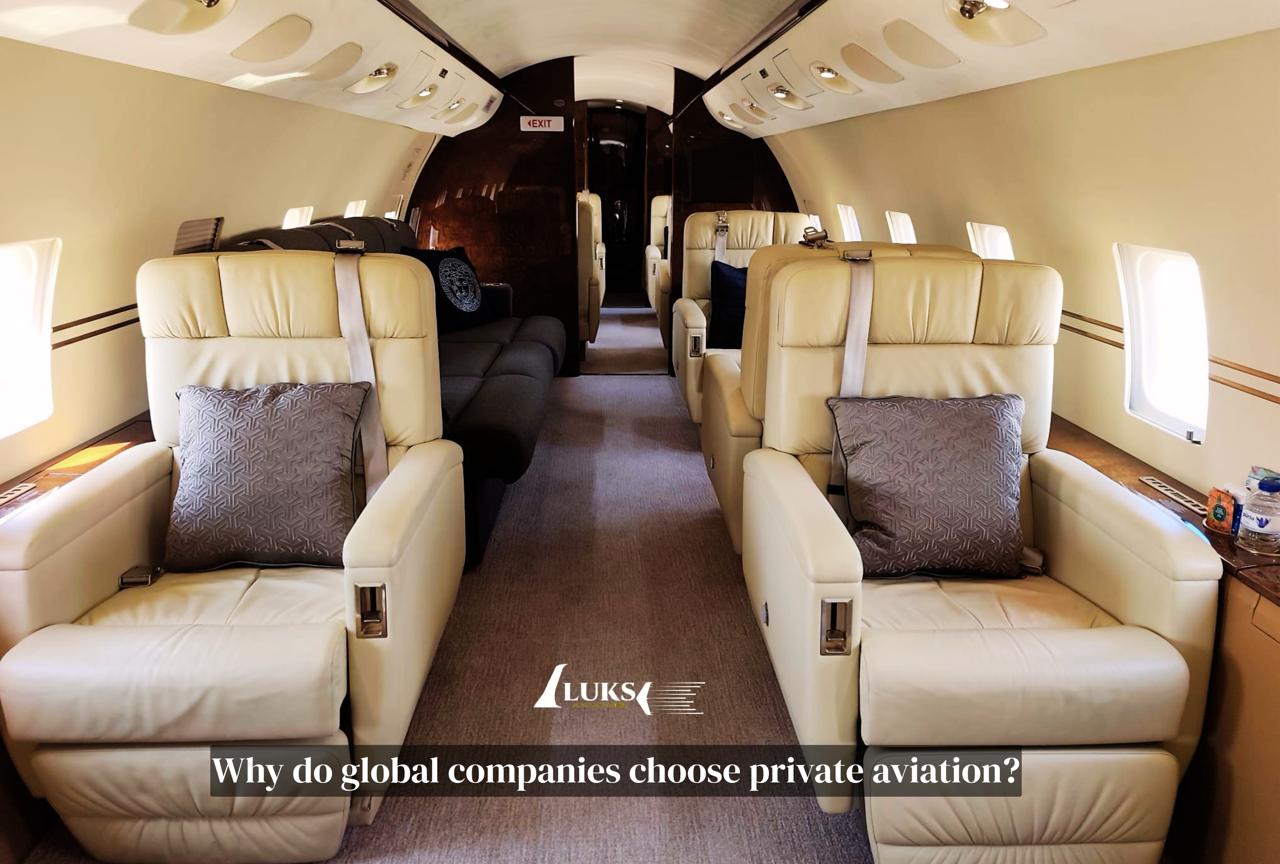
Private Aviation for Companies: In most boardrooms today, travel is not treated as a simple logistical detail. For companies operating across multiple countries, how executives move from one place to another can directly affect timing, decisions, and even business outcomes.
That’s one of the main reasons private aviation has become part of how many global companies operate. Not because it looks impressive, but because it solves very practical problems that come with international business travel.
Time is usually the real reason
If you speak to executives who travel frequently, one issue comes up again and again: time wasted in transit.
Commercial flights come with fixed schedules, early arrivals at airports, security checks, delays, and connections that don’t always align with business needs. Even a short trip can easily turn into half a day of travel.
Private aviation changes that structure. The aircraft operates around the company’s schedule, not the other way around. That means a team can leave when they are ready, arrive closer to their actual destination, and often return the same day without losing productive hours.
In business terms, that time difference matters more than it seems on paper.
Flexibility that matches real business life
Corporate schedules rarely remain in place for long. One appointment is rescheduled. Another deal suddenly pushes through, and an inspection of the site becomes an immediate requirement.
Most of the time, such situations do not allow you to wait for a commercial flight available later.
Private aviation gives you the opportunity to change your plans very quickly, and in many cases, flights can be organized or changed on short notice, which makes your top executives responsive rather than tied to airline schedules.
Getting closer to where the work actually happens
Another practical advantage is airport access.
Commercial airlines usually connect major cities, but many business activities happen outside those hubs—industrial zones, remote facilities, project sites, or secondary cities.
Private aircraft can use smaller airports that are physically closer to the final destination. This reduces ground travel time, which is often the most exhausting and time-consuming part of a business trip.
A working space, not just transport
For many executives, the flight itself has become an extension of the office.
Instead of being in a crowded terminal or trying to work in transit, private aviation offers a controlled environment where meetings can take place, documents can be reviewed, and decisions can be made without interruptions.
It’s not about luxury in this context—it’s about using travel time more efficiently.
Privacy where it counts: Private Aviation for Companies
Global business means not every chat’s for public ears. Talks on acquisitions, investments, restructuring, or expansion strategies — they usually need some discretion. Even the small stuff can be sensitive. Private aviation is a setting for these conversations not exposed outside, and that’s one reason it’s used so much by the finance, technology, and energy sectors.Back companies with international operations
For companies with a global footprint, travel isn’t a rare occurrence—it’s a regular part of day-to-day operations. In a short period, executives may have to travel to various places, sometimes on different continents. The use of commercial routes could impose a limit on the quantum of work that can realistically be accomplished in a short period. It helps to get more direct movement between key locations, resulting in faster execution of business plans.It also affects perception
While it is not the main reason companies use private aviation, it does influence how they are perceived.
Arriving prepared, on time, and without travel disruptions contributes to a more professional image when meeting partners, investors, or clients. In competitive industries, these details often matter.
Safety is not compromised
There is sometimes a misunderstanding that private aviation is less regulated than commercial aviation. In practice, it operates under strict international safety and maintenance standards.
Aircraft are maintained regularly, crews are trained continuously, and operations are monitored closely to meet aviation regulations.
For companies, this means reliability is part of the system, not an afterthought.
Not every company actually needs it
Private aviation is not a standard requirement for every business.
Companies with limited travel needs may not see enough benefit to justify it.
But for firms with regular international travel, tight schedules, or senior leadership mobility needs, the benefit becomes much more apparent. It’s typically a matter of operational need, not status.Final thought: Private Aviation for Companies
Private Aviation for Companies: Private aviation is the choice of global firms because it offers them something that they cannot easily get with commercial travel, control over time and movement. The way people move is, in fact, the way a key component of the strategy moves. For most companies, private aviation is a better way to keep the business running without delays.read more:
Private Aviation and Luxury Services: Your Complete Guide
The Future of Private Jets: Will We See Supersonic Speeds?
Chartering a Private Jet for Special Occasions: Tips and Guidelines

